Generations
PAM4 and the Gen6 signal: Four levels, less margin
PAM4 replaces the two-level NRZ eye of earlier PCI Express generations with a four-level signal, so each unit interval carries two bits instead of one.
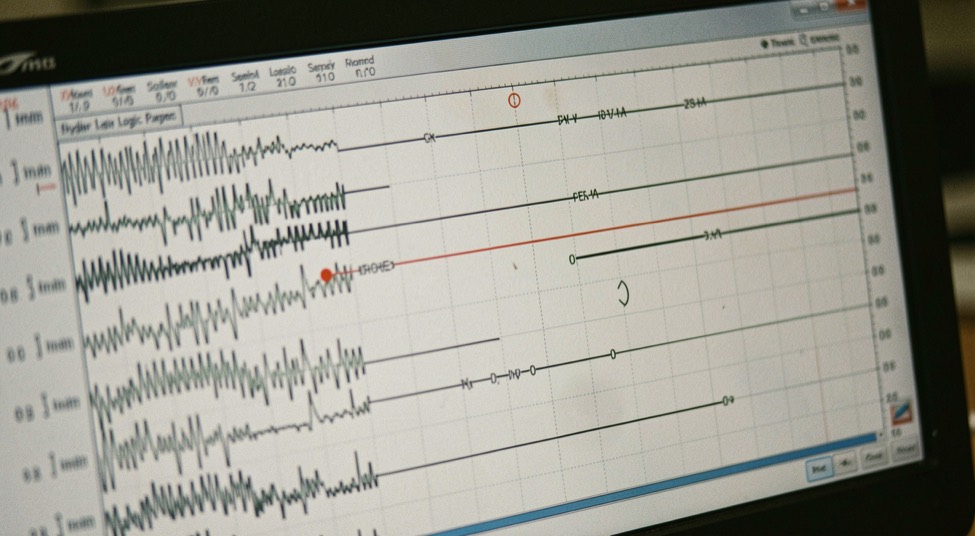
PAM4 replaces the two-level NRZ eye of earlier PCI Express generations with a four-level signal, so each unit interval carries two bits instead of one. At the electrical level this divides the same peak-to-peak swing into three stacked eyes, cutting the vertical opening per eye to roughly a third and forcing the link to lean on forward error correction and stronger equalization. The change buys throughput at the same symbol rate, and it is paid for in signal-to-noise margin.
The trade is not new outside PCI Express. Serial links in optical and backplane work moved to four-level signalling years earlier for the same reason: the channel loss at a given Nyquist frequency sets a ceiling on the symbol rate, and adding levels is one way around it. The history of how communities wired themselves to networks, from what was a free-net to municipal broadband, is a separate story, but it shares the same shape: a physical constraint forces a design change, and the change has a price.
What does PAM4 change at the electrical level?
NRZ uses two levels, commonly labelled 0 and 1, and the receiver slices the waveform at a single threshold near the midpoint. The eye diagram shows one opening. Vertical margin is the distance from the sampled level to that threshold, and horizontal margin is the distance to the nearest transition.
PAM4 uses four levels, often labelled 0, 1, 2 and 3, and the receiver needs three thresholds. The eye diagram shows three openings stacked in the same voltage window. If the transmitter keeps the same peak-to-peak amplitude, each eye is about one third as tall as the NRZ eye, and the distance from any level to its nearest threshold is roughly one third of the NRZ distance. That is the headline electrical change: the same swing, split three ways.
Two consequences follow immediately. First, the signal-to-noise ratio required for a given bit error rate rises, because the decision distance shrinks while the noise floor does not. Second, linearity matters more. In NRZ, a transmitter that compresses the top of the waveform distorts one level. In PAM4, the same compression moves the spacing between adjacent levels, and uneven spacing shifts the thresholds away from where the receiver expects them. Transmitter linearity, output return loss and the matching of the three slicer levels all become first-order concerns rather than second-order ones.
| Level | What it carries | What it costs |
|---|---|---|
| 0 | Two bits per symbol, lowest voltage | Smallest distance to the next threshold; most exposed to ground bounce and baseline wander |
| 1 | Two bits per symbol, lower middle | Threshold sits between two populated levels; slicer offset directly eats margin |
| 2 | Two bits per symbol, upper middle | Same threshold sensitivity, plus compression from the driver's upper rail |
| 3 | Two bits per symbol, highest voltage | Headroom to the supply rail limits swing; clipping flattens the top eye |
Why does the encoding change with it?
Four-level signalling raises the raw symbol error rate for the same channel. A single wrong slice decision corrupts two bits, not one, and the three eyes are closer together, so more decisions land on the wrong side of a threshold. The link layer cannot simply accept that rate.
The answer in PCI Express Gen6 is a combination of forward error correction and a stronger, more adaptive equalization chain. FEC adds parity that lets the receiver correct a bounded number of symbol errors before they reach the data link layer, which restores the delivered bit error rate to a workable figure. The cost is latency and overhead: parity bits consume bandwidth, and the correction and interleaving add delay that did not exist in NRZ generations.
Equalization changes shape as well. In NRZ links, a decision feedback equalizer with a handful of taps and a continuous-time front end is often enough. With four levels, the receiver needs more taps, finer adaptation and, in many implementations, a sequence detector that considers past symbols rather than slicing each one independently. The transmitter side follows: feed-forward equalization and, where the channel demands it, a driver whose levels stay evenly spaced across the whole swing.
This is why the encoding question and the electrical question are the same question. Four levels are chosen because the channel cannot carry a faster two-level symbol rate without unacceptable loss. Once four levels are chosen, the error rate forces FEC, and FEC forces the framing, latency and overhead budget to change with it.
What does the change cost in margin?
The margin cost shows up in three places.
Vertical margin per eye falls by roughly a factor of three against NRZ at equal peak-to-peak swing, before any other effect. Some of that is recovered by running a larger swing, but supply rails and receiver input ranges cap how far that can go.
Noise margin is further reduced by the linearity budget. Any compression, any threshold offset, any crosstalk that couples unequally into the three eyes eats into the smallest of them first. Crosstalk that was tolerable in NRZ can close the top or bottom eye in PAM4.
Finally, there is a timing and complexity cost. FEC and the deeper equalizer add latency, and the link training sequence has to converge on more parameters. A Gen6 link that trains successfully but sits close to its margin limit may pass a short test and fail under temperature drift or after a connector mate cycle.
Checklist before believing a Gen6 link
- Confirm the eye height at the receiver pins, not at the transmitter output, and confirm it for all three eyes rather than the average.
- Check level spacing for evenness across the full swing, including the top and bottom levels where driver compression is most likely.
- Verify that the FEC block is actually correcting errors and not merely reporting a corrected count that hides a marginal channel.
- Measure bit error rate after FEC over a run long enough to catch rare bursts, not just a short capture.
- Re-run the measurement after a temperature soak and after a connector mate cycle, since margin that exists only at room temperature is not margin.
- Confirm that the equalizer adaptation converges to a stable set of coefficients and does not drift during the run.
Common mistakes
- Comparing PAM4 eye height directly with NRZ eye height and concluding the link is broken. The comparison is only meaningful per eye, at equal swing.
- Treating FEC as a fix for a bad channel. FEC corrects a bounded error rate; it does not create margin that was never there.
- Measuring only the middle eye. The outer eyes carry the same data and often have less room.
- Ignoring transmitter linearity because the eye looks open on a scope with a clean pattern. Real traffic and real crosstalk expose spacing errors that a short pattern hides.
- Assuming a trained link is a healthy link. Training reports that the receiver locked, not that the margin is comfortable.
- Forgetting that latency changed. A design that met its timing budget on Gen5 may not meet it on Gen6 once FEC and deeper equalization are in the path.
The page behind these facts
The figures on this page are read from the source the text names, pcisig.com, consulted on September 6, 2026. How this desk reads a document, and what it does with a figure it cannot source, is set out in sources and method.