Method
Sources and Method
A figure without a document behind it is a rumor. This page describes exactly what the desk does before a number is allowed onto a page.
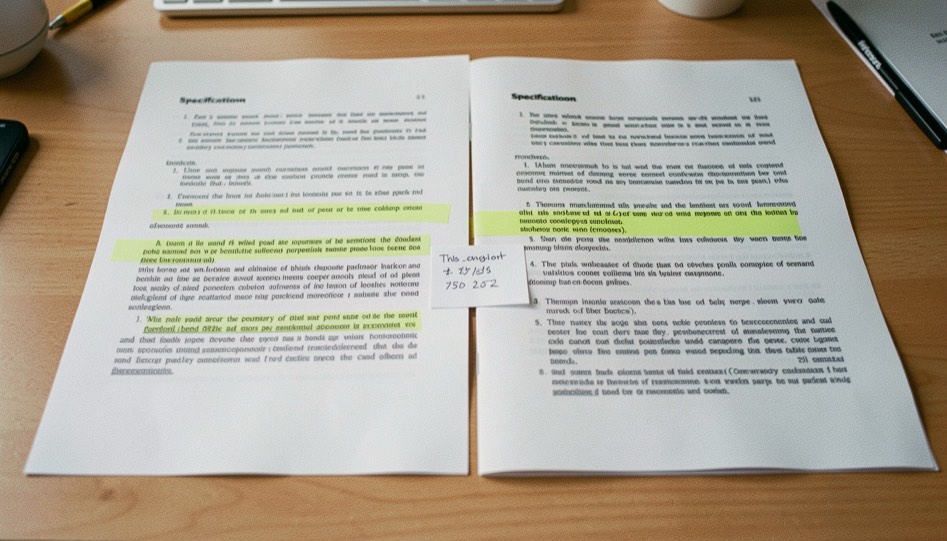
What counts as a source
The desk ranks documents in three bands. A primary source is a published specification, a vendor datasheet, a programming guide or an official errata sheet: it is the document the industry itself acts on. A secondary source is technical press, an encyclopedia entry or a conference presentation that reports a primary document. Everything else is a lead, not a source, and never carries a number onto a page.
Where a specification is behind a paywall or a membership, the desk says so rather than pretending to have read it. A figure taken from a vendor document that quotes a specification is labelled as such, because a vendor summary and the specification are not the same object.
How a figure is recorded
Every published figure carries three things in the desk record: the value, the document it came from with enough detail to find the passage again, and the day the document was read. Reading dates matter more than they look. A specification revision, a form factor guide and an errata sheet all move, and a figure that was right in one revision can be wrong in the next without anybody announcing it.
Figures printed on the front page follow a stricter rule than figures inside an article: they are published only when the value comes from a primary document that the desk has read directly. If a figure is only available second hand, it stays inside an article where its status can be described in a sentence.
When two documents disagree
Disagreement is normal and is not resolved by picking the more convenient number. The desk follows the document with the narrower scope and the later date, records both values, and says in the text that the two exist. Where the disagreement is between a rule and common practice, they are never printed in the same cell of a table: a specification limit and a number engineers actually use are different kinds of fact.
The restored historical pages
Two addresses on this site answer at their exact historical form because documents still in circulation point at them. Their content is written fresh from current sources. Nothing of the previous site is republished, no membership list is reconstructed, and no former participant is named. Where the old page held information the desk cannot verify today, the page says what the address used to serve and where the equivalent reading is now.
Every other historical address of this domain is answered according to a table published with the site: a redirect when a page here genuinely covers the same subject, a gone response when the content was deliberately not taken over, and an honest not found otherwise. No address is redirected to the home page as a catch all.
What the desk could not verify
Two limits are worth stating plainly because they shape several pages. The first is that the base specification of this interconnect is not a public download, so a figure that comes from a vendor document quoting the specification is labelled as coming from that vendor document. The second is that a number of terms used everywhere in this field, including the names of some link states and the details of the compliance program, could not be traced to a document the desk read directly. Where that is the case, the page says a term is used in the industry rather than claiming a specification defines it that way.
Both limits are reading work, not writing work, and they are the first items in the queue. When one of them is closed, the pages that depend on it are revised and the revision is dated in the bench notes. Until then the gap is visible on the page rather than smoothed over with a confident sentence, because a reader who can see the edge of what is known can decide what to check, and a reader who cannot see it has to check everything.
Figures, tables and rounding
Where a table on this site gives a derived value, the derivation is stated next to it rather than left implicit, and the derived value is rounded once, at the end. A per lane byte rate computed from a transfer rate and an encoding ratio is a derived value in that sense: the transfer rate is a published figure, the ratio is a published figure, and the byte rate is arithmetic that any reader can repeat. Nothing on this site presents arithmetic as if it were a published number, and nothing presents a published number without saying which document published it.