Section 04
Compliance and Test
How a compliance program is organized, what a receiver eye diagram measures, and why a mask is a pass or fail rather than a score.
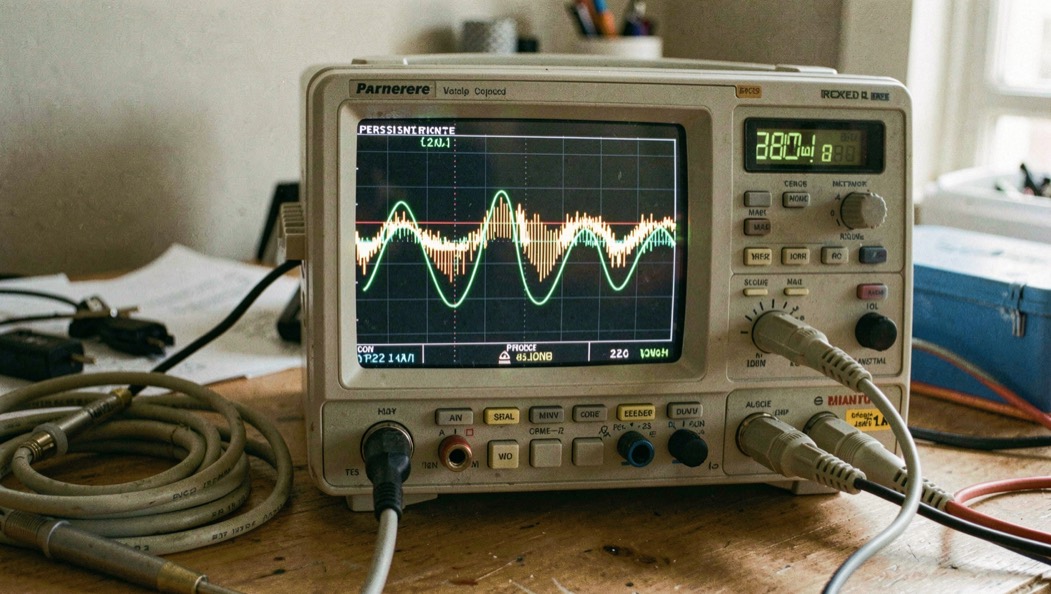
What a compliance result actually says
A product that passed a compliance test passed a defined set of measurements, on defined equipment, on a defined day. That is a useful and narrow fact. It is not a promise that the part will work in a particular system, and it is not a general statement of quality. Reading a compliance claim well means asking which tests, which revision of the test specification, and when.
What an eye diagram measures
An eye pattern is built by sampling a signal repeatedly against the bit period and drawing the traces on top of each other. What appears is the probability density of the voltage over time, which is why the shape in the middle is read as margin: an open eye means the combined effect of noise, dispersion and intersymbol interference has left room for the receiver to decide, and a closed eye means it has not. The measurement becomes a pass or a fail when a forbidden template is laid over it, a practice this desk describes as common test and measurement usage rather than as something it could trace to a document it read. The reading itself is in reading a receiver eye.
Who runs the program?
The specifications of this interconnect are published by an industry consortium formed in 1992, which began life as a compliance program for an earlier bus and whose documents are available to its members. The consortium is widely understood to run compliance workshops where member companies test interoperability together, and to publish a list of products that passed. The desk could not read those pages directly, so this site says the program is widely described that way and does not describe its rules as if it had. That limit, and what would close it, is in how a compliance program works.
The address that still receives readers
A chipset datasheet published in June 2004 sends its reader to one address on this domain for guidance on receiver compliance measurement, naming a document by its number. That document could not be retrieved in 2026 from the vendor, from the consortium or from the public archive. The address answers again, and the page says what the reference was for and where the equivalent reading is now, without describing contents nobody can check. It is document 300312-001.
What to do with a compliance figure
Treat it as a dated measurement rather than a property of the part, ask which revision of the test procedure produced it, and check whether the configuration you care about was in scope. A figure that survives those three questions is worth something. One that does not is marketing, and no amount of decimal places changes that.
The other doors of the publication: Link Basics, Generations, Form Factors, Topology, Ecosystem and Bench Notes. Every one of them points back to the link speed table.
In this section
12 pages, newest first.
-
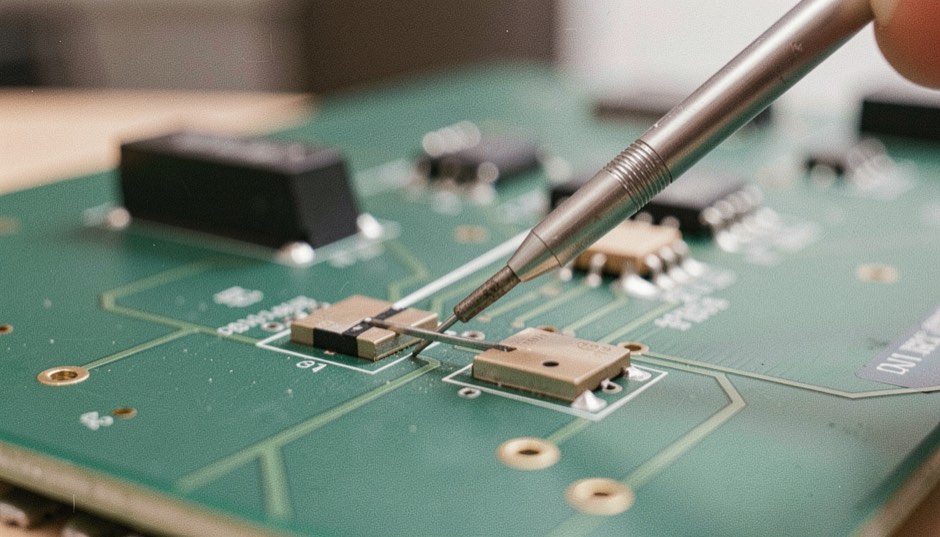
Reading a Receiver Eye Diagram
An eye diagram is thousands of bit periods drawn on top of each other. The shape in the middle is the margin a receiver has left, and the mask is the shape it must clear.
September 6, 2026
-
How a Compliance Program Works
A product that passed a compliance workshop passed a defined set of tests on a defined day. That is a useful fact, and it is a narrower one than most marketing copy suggests.
September 6, 2026
-

What a bit error rate actually counts
The bit error rate is a bound on a probability, and the number of bits a bench must push before a clean run means anything is a consequence of it.
September 6, 2026
-

Reading an old datasheet as an archive
A datasheet survives its product as a primary source, and the reader who treats it as an archive can still extract testimony from it.
September 6, 2026
-

The sign-off checklist a board owes you
Acceptance is a boundary, and the checklist is what makes the boundary real: demonstrations walked in order, each able to fail.
September 6, 2026
-

Shall, should, may: Reading a spec's verbs
A specification uses a small set of verbs to sort statements into two piles: what a vendor must do to claim compliance, and what it is free to do or skip.
September 6, 2026
-

Diagnosing a link that will not train
A link that will not train is diagnosed from evidence, not from suspicion.
September 6, 2026
-

The record a compliance run leaves behind
A repeatable compliance run records four things: the exact configuration in force, the commands or steps in the order they ran, the raw output each step produced, and the environment the run depended on.
September 6, 2026
-

Document 300312-001, and Where That Reading Goes Now
If you arrived from a chipset datasheet looking for document 300312-001, this page tells you what that reference was for and which current documents answer the same question.
September 5, 2026
-

What the bench controls before measuring
Every compliance number is a product of its measurement conditions, and the first act of bench literacy is naming them.
September 5, 2026
-

Test and retest: what one run proves
A passing run is a sample, not a guarantee, and the discipline of deciding how much repetition a conclusion needs is older than electronics.
September 5, 2026
-

Errata and change bars: the document's memory
A living document accumulates a dated ledger of its own corrections, and reading it is how a reader learns the text changed under them.
September 5, 2026